


- RISTORANTI-TRATTORIE
- PIZZERIE
- AGRITURISMI
- PRODUTTORI
- CONSORZI

 · Abbiamo qualcosa da raccontarvi: "Cremona …da visitare" ·← Elenco BlogCremona …da visitare
La leggenda narra che la città sia stata fondata da Ercole che di ritorno dall’Iberia, fermatosi a riposare sulle rive del fiume Po, si trovò a fronteggiare ladroni dalla struttura gigantesca che saccheggiavano i piccoli villaggi. In realtà la città fu fondata dai Romani nel 218 a.C. e conobbe un lungo periodo di grande prosperità grazie alla sua posizione strategica sul Po e lungo la via Postumia. Nel corso del XII secolo, grazie allo sviluppo del commercio fluviale Cremona visse un periodo di grande importanza politica ed economica che culminò nella costruzione del complesso monumentale della piazza del Comune: l’unità fra Chiesa e Comune venne sancita con l’erezione nel 1107 della nuova Cattedrale, nel 1206 venne costruito il Palazzo Comunale. A partire dal 1420 la città entrò definitivamente a far parte del Ducato di Milano. Nel 1441 vi furono celebrate le nozze tra Francesco Sforza e Bianca Maria Visconti; la tradizione fa risalire a questo avvenimento la nascita del torrone, che sarebbe stato servito per la prima volta in forma di torre durante il banchetto. Nel corso del XVI e XVII secolo Cremona si distinse per l’attività musicale e per la produzione liutaria. I liutai cremonesi raggiunsero risultati eccellenti che li resero famosi nel mondo: il primo che si distinse nel secolo XVI fu Andrea Amati, capostipite di una famiglia di celebri liutai. Suo nipote Nicolò fu probabile maestro dei capostipiti di due altre grandi famiglie, i Guarneri e gli Stradivari. Cremonese fu anche il compositore Claudio Monteverdi che è considerato l’inventore del melodramma.
PIAZZA DEL COMUNE. È la piazza principale situata sul punto più alto della città. Vi si affacciano la Cattedrale, il Torrazzo, la torre campanaria in muratura più alta d’Europa; il Palazzo Comunale; la Loggia dei Militi e il Battistero.
LA CATTEDRALE (IL DUOMO) Parrocchia di Santa Maria Assunta. È un tempio romanico continuamente riadattato con elementi gotici, rinascimentali e barocchi. iniziata nel 1107, distrutta da un terremoto nel 1117 e consacrata nel 1592 da Cesare Speciano All’interno conserva notevoli capolavori di scultura e di pittura, affreschi del pittore cremonese Boccaccio Boccaccino, del Bembo, di Altobello Melone, di Bernardino Gatti. Notevole il coro ligneo del Platina. Nella cripta sotto il presbiterio riposano patroni e protettori tra i quali Sant’Omobono patrono di Cremona.
IL BATTISTERO di San Giovanni Battista, a pianta ottagonale, è alto 34 metri. Al centro si trova il fonte battesimale cinquecentesco realizzato con un blocco unico di marmo rosso di Verona. Al suo esterno sono scolpite le unità di misura ufficiali del mattone e della tegola secondo le prescrizioni del regolamento della Città di Cremona del 1388.
IL TORRAZZO e il suo MUSEO VERTICALE. Simbolo della città è la torre campanaria medievale in laterizio più alta d’Europa (112,54 metri). Al suo interno corre una scala di 502 gradini, che permette ai visitatori di poter ammirare tutti gli ambienti interni della grande torre, in un affascinante percorso legato alla misurazione del tempo, al quarto piano è incastonato uno degli orologi astronomici più grandi del mondo, vero capolavoro di meccanica, realizzato a partire dal 1582. Il Torrazzo ospita anche un concerto di 7 campane che va dai 465 kg della più piccola a 3270 kg della più grande.
La LOGGIA DEI MILITI. L’elegante edificio, interamente in laterizio con pianta quadrangolare, presenta alte arcate ogivali sulla fronte e sul fianco, grandi trifore e bifore gotiche. Fu edificata nel 1292 quale punto di incontro della “Società dei Militi”, una società alla quale appartenevano i più ricchi ed eminenti abitanti della città e del suo territorio che si contrapponeva al popolo. Sotto il suo porticato viene conservato l’emblema della città: una composizione scultorea costituita da due figure di Ercole che reggono al centro lo stemma cittadino.
PALAZZO DEL COMUNE. Il palazzo di forma quadrangolare si articola intorno a un cortile interno. Eretto nel 1206 venne ampliato una prima volta nel 1245, venne poi interessato da sostanziali modifiche a partire dal 1496 e per tutto il corso del XVI secolo. All’interno sono custodite importanti opere quali il Portale della seconda metà del ‘500, le grandi tele del Genovesino, del Malosso e di Francesco Boccaccino, il camino di marmo intarsiato da Gaspare Pedone nel 1502.
Il MUSEO DIOCESANO. Ospitato all’interno del settecentesco palazzo vescovile, racconta una parte importante della storia, dell’arte e della spiritualità cremonesi mediante l’esposizione di oltre 100 opere provenienti da diverse parrocchie e dalla raccolta di circa venticinque opere di proprietà della Fondazione Arvedi Buschini.
La STRADA BASOLATA ROMANA. Presso i porticati di via Solferino è possibile vedere i resti ben conservati di due strade di origine romana costituiti da lastroni in bàsoli, pietre di eccezionale durezza, spesso di origine vulcanica o calcarea, di notevole peso e dimensione. La strada costituisce uno dei cardini minori della città romana.
MUSEO ARCHEOLOGICO SAN LORENZO. Un piccolo imperdibile museo che può essere ritenuto il cuore delle raccolte archeologiche di Cremona. Allestito in una chiesa del XIII secolo, è un museo in un museo. Al suo interno si trova una domus romana allestita come ritrovata in scavo oltre a circa 500 oggetti tra cui mosaici, sculture, affreschi, urne cinerarie, suppellettili e anfore.
La CHIESA DI SAN MICHELE. La chiesa dedicata al grande santo guerriero si deve, secondo la tradizione, alla Regina Teodolinda che, alla morte del marito Agilulfo avvenuta nel 615, pose mano alla sua costruzione. L’edificio fu rifatto alla fine del XII secolo in stile romanico del quale si conserva, nel catino absidale, la terrificante e maestosa visione del Cristo Giudice. All’interno si presenta austera e solenne anche se arricchita da altari, dipinti e decorazioni aggiunti in epoche successive.
La CHIESA DI SANT’ABBONDIO. Di fondazione romanica per annessione al convento dei Benedettini ai quali successero gli Umiliati nella seconda metà del XV secolo e i Teatini nel 1579. La chiesa mostra intatto il ciclo pittorico tardo manierista con la quale fu rivestita. Il complesso comprende anche il chiostro rinascimentale, il santuario della Vergine Lauretana e il campanile.
GALLERIA XXV APRILE. Il maestoso edificio che si affaccia sui Giardini di Piazza Roma è un esempio tipico dell’architettura di epoca fascista. Fu edificata in due fasi successive su progetti dell’architetto cremonese Nino Mori ed ultimata nel 1934.
Al MUSEO DEL VIOLINO è possibile scoprire la storia dell’eccellenza liutaria cremonese, iscritta nel patrimonio immateriale UNESCO. Sono esposte opere di Amati, Stradivari, Guarneri e si possono ammirare oltre 700 disegni, forme e attrezzi utilizzati da Stradivari nella propria bottega. L’epoca moderna e contemporanea è ripercorsa attraverso violini, viole, violoncelli e contrabbassi premiati alle mostre-concorso dal 1976. Al suo interno l’Auditorium Giovanni Arvedi, un luogo unico e affascinante, palcoscenico naturale per gli strumenti della collezione.
PALAZZO CITTANOVA. Costruito in epoca medievale nella “città nuova” per ospitare le assemblee dei ghibellini i quali si contrapponevano ai guelfi, sostenitori del Papa. Nel 1412 divenne la sede della corporazione (“università”) dei mercanti di fustagno. Nel 1756 fu utilizzato come caserma e successivamente, nel 1805, sede dell’archivio notarile.
PALAZZO TRECCHI. È chiamato anche “Dimora dei Principi Transitanti” perché ospitò, nel corso della storia, alcuni dei più celebri regnanti, dall’imperatore Carlo V a Federico Gonzaga. Fu costruito dal marchese Giacomo Trecchi nel 1494 ma venne totalmente rielaborato nel 1843 dal marchese Alessandro Trecchi. Percorrendo un maestoso scalone si raggiungono le sale del piano nobile, con affreschi e decorazioni del XIX secolo.
CHIESA DI SANT’AGATA. La chiesa edificata nel 1077 fu completamente rinnovata una prima volta su progetto di Bernardino De Lera e poi tra il 1836 e il 1845 da Luigi Voghera che ne ricostruì la facciata in stile neoclassico. Al suo interno si possono ammirare affreschi di Giulio Campi e una Pietà di Bernardino Gatti. Della chiesa originaria rimane oggi solo il campanile, il più antico fra le torri campanarie ancora esistenti in città.
CHIESA DI SANT’OMOBONO. Costruita intorno all’anno 1000, si affaccia sull’omonima piazza, insieme a Palazzo Pallavicino e Palazzo Cattaneo. Dedicata inizialmente a Sant’Egidio, venne in seguito intitolata al santo patrono della città: in essa, infatti, il Santo morì durante la celebrazione della messa nel 1197.
CHIESA DI SANT’AGOSTINO. Eretta fra il 1339 e il 1345 nelle forme tipiche del gotico monastico lombardo, subì numerosi rimaneggiamenti degli spazi interni, conservando della forma originaria solo la struttura della facciata. Centro di una vivace vita religiosa e culturale grazie alla presenza dell’attiguo monastero dell’Ordine degli Agostiniani, la chiesa si arricchì nei secoli di importanti opere d’arte tra cui bassorilievi e sculture, gli affreschi e una tavola del Perugino del 1494.
MUSEO CIVICO ALA PONZONE. All’interno del cinquecentesco Palazzo Affaitati è ospitato il Museo Civico Ala Ponzone, una pinacoteca che raccoglie più di 2mila pezzi, dal Medioevo al Novecento rappresentativi dell’arte cremonese. Fra questi alcuni capolavori come il celebre “San Francesco in meditazione” del Caravaggio, o l’emblematico “Ortolano” di Francesco Arcimboldo.
CHIESA DI SAN SIGISMONDO. È uno dei gioielli architettonici del Rinascimento lombardo, prima della venuta del Bramante. Fu costruita nel 1463 su commissione di Bianca Maria Visconti dove sorgeva la chiesa in cui aveva sposato Francesco Sforza nel 1441. L’interno venne affrescato a partire dal 1535 e rappresenta uno dei più armoniosi complessi decorativi del Manierismo cinquecentesco dell’Italia settentrionale. Adiacente alla chiesa è il chiostro dell’antico convento.
CASA STRADIVARI, in corso Garibaldi al numero 57 Antonio Stradivari ha creato numerosi strumenti musicali, capolavori di raffinata artigianalità e superbe acustiche. Dal 1667, quando Stradivari sposò Francesca Ferraboschi e si trasferì in questa casa e vi costruì i suoi primi strumenti.
TEATRO PONCHIELLI. Era il 1747 quando i nobili decisero di realizzare un vero teatro a Cremona e ne incaricarono Battista Zaist. Purtroppo un incendio lo distrusse e a partire dal 1806, sulle sue rovine, venne costruito il nuovo “Teatro della Concordia” progettato da Luigi Canonica. Venne intitolato ad Amilcare Ponchielli solo ad inizio Novecento.
MUSEO DELLA CIVILTÀ CONTADINA. Varcando il portone della cascina “Cambonino Vecchio” si entra in ambiente ricco di storia e tradizioni, quelle delle nostre origini. È possibile visitare la casa del contadino allestita con attrezzi ed oggetti di uso quotidiano, passeggiare nell’aia, camminare nella stalla, ammirare carri e macchine agricole e visitare il piccolo oratorio, elemento di pregio di questa piccola cascina.
STATUA DI ALMICARE PONCHIELLI. Inaugurata nel 1892, fu costruita dopo la scomparsa del musicista grazie ad una raccolta fondi partita dall’osteria della Marcella, all’epoca di fianco al Teatro Concordia. Dopo una prima sistemazione di fronte a Palazzo Ala Ponzone, si trova ora all’interno dei Giardini di Piazza Roma.
PARCO DELLE COLONIE PADANE. Situato a 10 minuti dal centro storico e a pochi metri dal grande fiume, su un’area di 60 mila metri quadri, offre un parco avventura e aree gioco. Nato nel 1936 con il nome di “Colonia Fluviale Roberto Farinacci” fu progettata come un’opera gigantesca, funzionale alla salute, in linea con l’architettura tipica del periodo che al centro prevedeva una struttura a forma di poppa di nave.
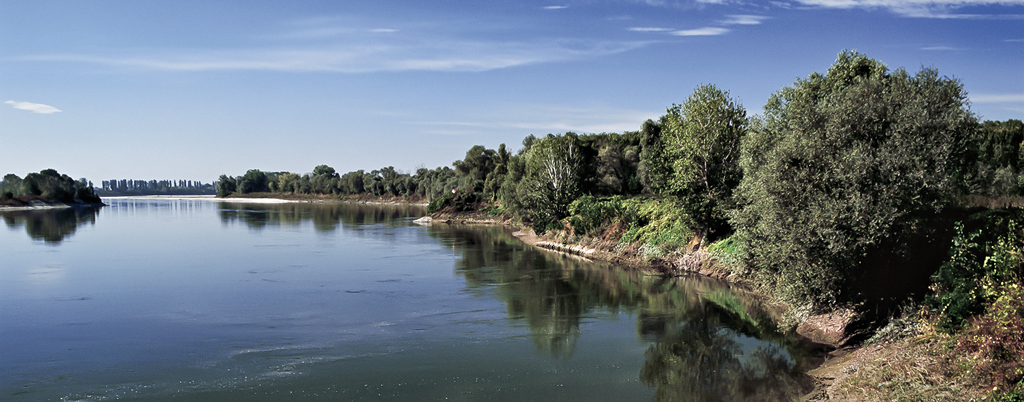
ATTRACCO FLUVIALE TURISTICO. La navigazione turistica sul fiume Po è un’esperienza naturalistica che permette di scoprire lanche, sabbioni, isole e per gli appassionati di flora vedere aironi, cormorani, e pesci.
•••
Legend has it that the city was founded by Hercules who on returning from Iberia, stopping to rest up on the banks of the river Po, was met with giant thieves who had sacked the small villages. In reality, the city was founded by the Romans in 218 B.C. and lived through a long period of great prosperity, thanks to its strategic position on the Po and the via Postumia. Over the course of the XII century Cremona gained notable riches thanks to the development of river trade; the political and economic importance of the city brought about a building renewal, culminating in the construction of the collection of buildings in the Piazza del Comune; the link between Church and local government was sanctioned with the building in 1107 of the new Cathedral and the Town Hall was built in 1206.From 1420 the city became definitively part of the Duchy of Milan. In 1441 there were celebrated the nuptials of Francesco Sforza and Bianca Maria Visconti: tradition says that the birth of torrone dates back to this event, as it was served for the first time in the form of a tower during the banquet. Over the course of the XVI and XVII centuries Cremona became well known for music activity and for the production of lutes which led to the creation of stringed instruments. The Cremonese luthiers gained excellent results which made them world famous: the first to stand out in the XVI century was Andrea Amati, the head of a family of famous luthiers. His grandson Nicolò was probably the teacher of the heads of two other great families, the Guarneri and Stradivari. The composer Claudio Monteverdi who is considered the inventor of melodrama was also born in Cremona.
PIAZZA DEL COMUNE. It is the main square situated at the highest point in the town. Overlooking the square are the Cathedral, Torrazzo, the tallest masonry built bell tower in Europe; the Palazzo Comunale (Town Hall), the Loggia dei Militi and the Baptistry.
THE CATHEDRAL (DUOMO) Parish church of Santa Maria Assunta. This is a Romanesque temple continually adapted with gothic, renaissance and baroque elements. Begun in 1107, destroyed by an earthquake in 1117 and consecrated in 1592 by Cesare Speciano. Inside it holds important works of sculpture and painting, frescoes by the Cremonese painter Boccaccio Boccaccino, Il Bembo, Altobello Melone, Bernardino Gatti. The wooden choir stall by Platina is of note. In the crypt under the presbytery are the bodies of patrons and protectors amongst whom Sant’Omobono patron of Cremona.
THE BAPTISTRY of San Giovanni Battista St John the Baptist), octagonal in shape and 34 metres high. At the centre there is the 16th century baptismal font made from a sole block of red marble from Verona. Outside are sculpted the official units of measurement of the bricks and tiles according to the rules of the town of Cremona in 1388.
THE TORRAZZO and its VERTICAL MUSEUM. A symbol of the city is the tallest brick medieval bell tower in Europe (112.54 metres). Inside, there are 502 steps leading up which allow the visitor to admire all the internal spaces of the great tower in a fascinating route linked to the measurement of time, on the fourth floor there is one of the largest astronomical clocks in the world, a true mechanical masterpiece, made from 1582. The Torrazzo also houses a carillon of 7 bells which go from the smallest at 465 kg to the largest at 3270 kg.
The LOGGIA DEI MILITI. The elegant building, entirely in bricks, quadrangular in shape, has ogival arches on the front and the sides with large triple lancet and mullioned windows. It was built in 1292 as a meeting point of the “Società dei Militi”, a private organisation to which belonged the richest and most eminent inhabitants of the city and the territory. Beneath the porticoes there is preserved the emblem of the city: a sculptural composition made up of two figures of Hercules who rules at the centre of the town crest.
PALAZZO DEL COMUNE. (Town Hall) The palazzo, quadrangular in shape, is placed around an internal courtyard. Built in 1206 it was extended first in 1245 then underwent substantial modifications from 1496 and throughout the XVI century. Inside are held important works such as the Entrance door from the second half of the 16th century, important paintings by Genovesino, Malosso and Francesco Boccaccino, the marble inlaid fireplace by Gaspare Poedone in 1502.
DIOCESAN MUSEUM. Held within the eighteenth century bishops place, it tells an important part of Cremona history, art and spirituality through the display of more than 100 works coming from various parishes and the collection of around twenty-five works belonging to the Arvedi Buschini Foundation.
BASALT ROMAN ROAD. By the porticoes on via Solferino there can be seen the well preserved remains of two Roman roads built from basalt slabs, extremely hard stones, often volcanic or limestone in origin, both heavy in weight and large in size. The road constitutes one of the minor cornerstones of the Roman town.
SAN LORENZO ARCHAEOLOGICAL MUSEUM. A small unmissable museum which can be considered as the heart of archaeological collections in Cremona. Set up in a XIII church, it is a museum within a museum. Inside there is a Roman domus set up as it was found in a dig along with around 500 objects, amongst which mosaics, sculptures, frescoes, funeral urns, furnishings and amphoras.
CHURCH OF SAN MICHELE. The church dedicated to the great warrior saint owes its existence according to tradition to Queen Teodolinda who on the death of her husband Agilulf in 615, put her hand to the construction. The building was remade at the end of the XII century in Romanesque style of which is kept, in the apsidal basin the terrifying and majestic vision of Christ the Judge. Inside it appears austere and solemn despite being enriched with altars, paintings and decorations added in successive eras.
CHURCH OF SANT’ABBONDIO. Founded in Roman times and annexed to the convent of the Benedettini who were succeeded by the Umiliati in the second half of the XV century and then the Teatini in 1579. The church displays intact the late mannerist cycle of paintings it was covered in. The group of buildings also includes the renaissance cloister, the Vergine Lauretana sanctuary and the bell tower.
GALLERIA XXV APRILE. The majestic building which looks out onto the Piazza Roma gardens is a typical example of fascist era architecture. It was constructed in two successive phases following designs by the Cremonese architect Nino Mori and finished in 1934.
In the MUSEUM OF THE VIOLIN it is possible to discover the history of violin making excellence in Cremona, regarded as intangible heritage by UNESCO. On display are pieces by Amati, Stradivari, Guarneri and more than 700 designs, shapes and tools used by Stradivari in his own workshop can be viewed. The modern and contemporary era is covered through violins, violas, cellos and double basses that won prizes at the exhibition-competition of 1976. It houses the Giovanni Arvedi auditorium, a unique and fascinating place, a natural stage for the instruments in the collection.
PALAZZO CITTANOVA. Built in the medieval era in the “New City” to house meetings of Ghibellines who were against the Guelphs, followers of he Pope. In 1412 it became the seat of the corporation (“university”) of the moleskin merchants. In 1756 it was used as an army barracks and following that in 1805 it became the notary archives.
PALAZZO TRECCHI. Also known as the “Residence of the Travelling Princes” because it welcomed, over the course of history, some of the most famous rulers, from Emperor Carlo V to Federico Gonzaga. It was built by the marquis Giacomo Trecchi in 1494 but was completely rebuilt in 1843 by the marquis Alessandro Trecchi. Following a majestic staircase one reaches the rooms of the piano nobile, with XIX century frescoes and decorations,
CHURCH OF SANT’AGATA. Built in 1077, the church was completely remodelled for the first time following the design of Bernardino De Lera and then later between 1836 and 1845 by Luigi Voghera who reconstructed its facade in neoclassical style. Inside one can admire frescoes by Giulio Campi and a Pietà by Bernardino Gatti. Of the original church there only remains the bell tower, the oldest of the bell towers that still exist in the city.
CHURCH OF SANT’OMOBONO. Built around the year 1000, it looks out onto the square of the same name, along with Palazzo Pallavicino and Palazzo Cattaneo. Initially dedicated to Sant’Egidio, it was later dedicated to the patron saint of the city: in the church, in fact, the saint died during a mass in 1197.
CHURCH OF SANT’AGOSTINO. Built between 1339 and 1345 in typical monastic Gothic Lombard style, its internal spaces were redesigned many times, keeping of its original form just the structure of the facade. The centre of a lively religious and cultural life thanks to the presence of the Augustine Order monastery next door, the church was enriched over the centuries by important works of art amongst which bas reliefs and sculptures, frescoes and a painting by Perugino from 1494.
ALA PONZONE CIVIC MUSEUM. Within the fifteenth century Palazzo Affaitati is housed the Ala Ponzone Civic Museum, an art gallery that holds more than two thousand pieces, from the Medieval to the Twentieth century, representative of Cremonese art. Among these there are some masterpieces such as the famous “San Francesco in Meditation” by Caravaggio and the emblematic “Ortolano” by Francesco Arcimboldo.
SAN SIGISMONDO CHURCH. This is one of the architectural jewels of the Lombardy Renaissance, before the arrival of Bramante. It was built in 1463 commissioned by Bianca Maria Visconti on the site of the church where she had married Francesco Sforza in 1441. The interior was painted with frescoes from 1535 and it represents one of the most harmonious sixteenth century decorated buildings in mannerist style in northern Italy. Adjacent to the church is the cloister of the old convent.
HOUSE OF STRADIVARI, at number 57 Corso Garibaldi Antonio Stradivari created numerous musical instruments, masterpieces of refined craftsmanship and superb acoustics. From 1667, when Stradivari married Francesca Ferraboschi and he moved to this house and there created his first instruments.
PONCHIELLI THEATRE. It was in 1747 when the nobles decided to create a true theatre in Cremona and gave the task to Battista Zaist. Unfortunately, it was destroyed by fire and from 1806 the new “Concordia Theatre” was built on its ruins, designed by Luigi Canonica. It was named Amilcare Ponchielli only at the beginning of the twentieth century.
MUSEUM OF COUNTRY LIFE. Going through the doorway into the “Cambonino Vecchio” farmhouse, one enters a space that is rich in history and tradition, of our origins. It is possible to visit the house of the rural worker complete with tools and objects in daily use, go through the chicken house, walk in the stables, admire carts and agricultural machinery and visit the little chapel, a precious element of this small farmhouse.
STATUE OF AMILCARE PONCHIELLI. Presented in 1892, it was created after the death of the composer thanks to fund raising set up by the Marcella Osteria, at the time next to the Concordia Theatre. After being first located opposite Palazzo Ala Ponzona, nowadays it is to be found in the Piazza Roma gardens.
COLONIE PADANE PARK. Situated 10 minutes from the town centre and a few metres from the river, in an area of 60 thousand square metres, there is a adventure park and play area. Created in 1936 with the name of “Colonie Fluviale Roberto Farinacci” it was planned as a giant work, to aid health, in line with typical architecture of the time which at its centre holds a structure built in the shape of the stern of a boat.
TOURIST RIVER MOORINGS. Tourism navigation along the river Po is an experience in nature that allows one to discover oxbows, beaches, islands and for those passionate about wildlife to see herons, cormorants and fish.
Scopri
le specialità dei ristoratori del territoriodai un'occhiataHai un ristorante?
Dare visibilità online al tuo locale è un buon modo per raggiungere nuovi clienti.
CONTATTACISeguici su | © 2015 Andiamo a Tavola - Cremona | P. IVA 01287740193
- CONSORZI
- PRODUTTORI
- AGRITURISMI
- PIZZERIE